Sep 09, 2026 | Flooring America
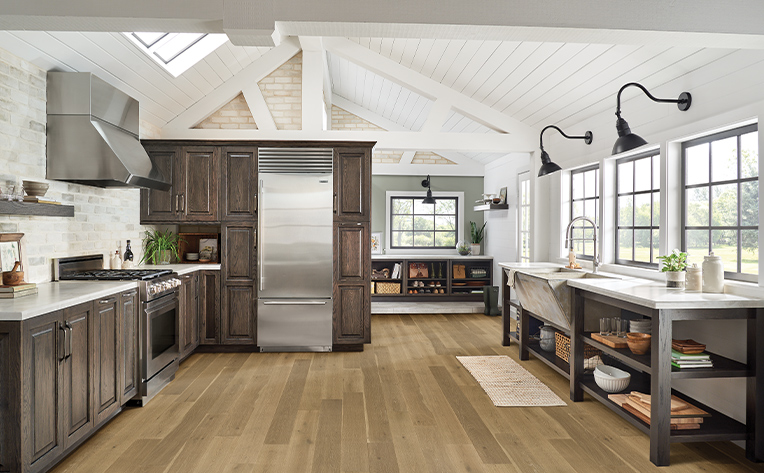
Hardwood floors bring warmth, character, and a timeless look to any room. But have you ever wondered what actually goes into making a hardwood floor? It's a lot more involved than cutting down a tree and laying planks across your living room.
We're here to help you make sense of your flooring options, starting with how hardwood is actually made. Read on to explore the process behind solid and engineered hardwood, and how to figure out which one is right for your home.
From tree to finished plank, here's how solid hardwood flooring comes together:
Once a tree is cut down and turned into logs, each log gets closely examined for quality. Graders look at how tight the wood grain is and how many knots show up in the wood. Tighter grain and fewer knots generally mean a higher quality plank.
Logs that pass grading get cut into planks using one of three methods, and each one gives the wood a slightly different look and level of durability.
Once the planks are cut, they're smoothed to remove saw marks and leveled for a consistent thickness. Tongue and groove edges are cut into each plank so they fit snugly together, edge to edge, once installed. From there, many planks go through an optional distressing process, done by hand or machine, to create a worn, hand-scraped look.
Finally, each plank gets a protective finish through staining or sealing, which can happen before or after installation depending on whether you choose pre-finished or unfinished flooring.
Engineered hardwood goes through two separate manufacturing processes that come together at the very end, one for the core and one for the visible wood layer on top.
The core sits underneath the real wood layer and gives engineered hardwood its extra stability. It's built from several layers of plywood, glued together with each layer's grain running in the opposite direction from the one below it.
This crisscross pattern is what helps engineered hardwood resist the expanding and contracting that solid wood can experience with changes in humidity. The finished result of this gluing and stacking process is called the core board.
While the core board comes together, a separate process creates the thin, real wood layer that will sit on top, known as the wear layer. This layer can be cut using one of three methods:
Once the core board and the top wood layer are both ready, they're glued together under pressure. The edges are then cut with tongue and groove or click-lock profiles, which lets the planks snap together for an easy, glue-less installation in many cases.
Like solid hardwood, engineered planks can go through an optional distressing process for an antique look, and they receive the same kind of protective staining or sealing finish before they're ready for your home.
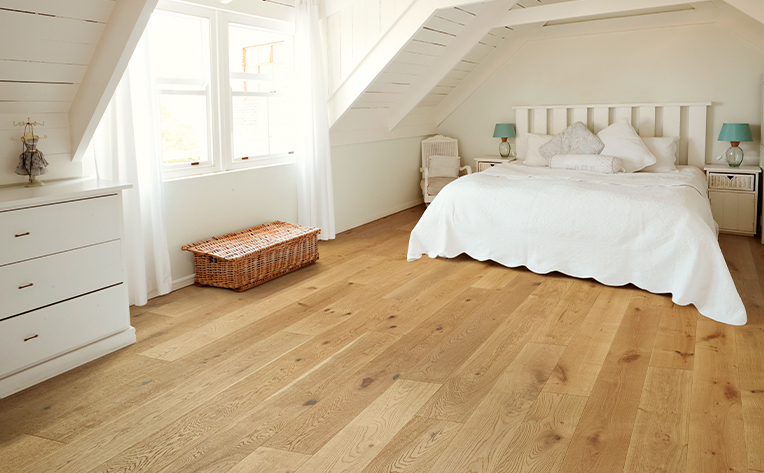
With so many wood species, plank sizes, and finishes out there, picking the right hardwood can feel like a lot. Here's a few things worth thinking through:
Now that you know what goes into every solid or engineered plank, you're in a great spot to choose a floor that fits your home and your life for years to come.
Still have questions about which type of hardwood is right for your home, or ready to see some options in person? Our team knows this stuff inside and out, and we love helping our neighbors like you find a floor that fits their space, their budget, and their family's day to day life. Don't wait to contact us today and find the hardwood floor that feels like home.
