Sep 03, 2026 | Flooring America
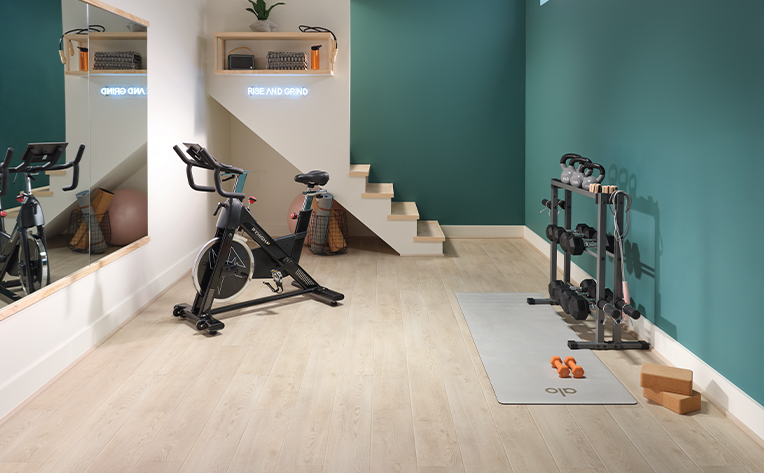
Setting up a home gym is an exciting step toward your health goals, and the floor under your feet plays a bigger role than you might think. The right home gym flooring protects your subfloor, cushions your joints, and gives you steady footing for every rep.
As your friendly flooring team, we want to help you find a floor that fits how you train, where your gym lives, and what equipment you use. Whether you're lifting in the garage, stretching in a spare room, or riding a bike in the basement, there's a great match out there for you and your family. Read on to explore how to match your floor to your workout, how thick your floor should be, and simple ways to keep it looking fresh.
Before you pick a material, think about what a normal workout looks like for you. The best flooring for a home gym is the one that fits your routine.
We carry foundation floors like luxury vinyl and carpet that work well in a home gym. Gym-specific add-ons like rubber, foam, and turf are specialty products that we may not carry, but we want you to know about them so you can plan your whole space.
Many home gyms use more than one floor. A solid foundation with add-on mats or tiles where you need them is a smart way to get the best of both.
These are the floors that can make up the base of your home gym. Each one is a great fit for the right kind of space and workout.
If your home gym shares space with a guest room, office, or playroom, luxury vinyl plank is a great way to keep the room stylish and practical. It comes in wood looks and tile looks, so it blends right in with the rest of your home.
Luxury vinyl is durable, easy to clean, and water resistant, which is helpful during workouts. It also resists mold and mildew. Many options can go right over your existing floor without a big renovation. For heavy weights or cardio machines, add rubber equipment mats in those spots to give your vinyl extra protection and your workouts extra cushion.
Carpet is soft on the joints and feels warm underfoot, which makes it a cozy pick for yoga, floor exercises, and light weights. A tight loop, like a berber carpet, holds up well to foot traffic and equipment.
Carpet tiles are an easy option too. If one area gets extra wear after a few too many sit-ups, you can swap out a single tile and keep the room looking fresh. Regular vacuuming and spot cleaning after sweaty sessions help keep odors away.
Once your foundation is in place, you can layer on specialty gym surfaces right where you need them. These products are sold by gym and fitness suppliers, and we may not carry them. They are still worth knowing about, so you can build a space that works for you.
Rubber is one of the most popular home gym flooring choices for good reason. It's dense, slip resistant, and built to handle heavy equipment, weightlifting, and the occasional dropped dumbbell. Its high shock absorption protects your subfloor while giving you a stable surface for floor exercises, martial arts, and cardio machines.
Many rubber products are made from recycled rubber, like old tires, so it's a nice pick for families who care about sustainability. It's also stain resistant and easy to wipe down after a sweaty session. Rubber comes in a few main formats, and each one is the right tool for a different space.
Foam floor tiles bring cushioning that feels gentle on your knees, back, and joints. They're light, easy to install, and come in fun colors and patterns, so you can make your workout space feel like your own.
Foam tiles are a great fit for yoga, stretching, kids' play spaces, and bodyweight exercises. They're water resistant and easy to clean. For heavy weights or sharp equipment feet, you can add a rubber equipment mat on top to help protect your foam floor.
If you love sled pushes and agility drills, turf flooring gives you an energizing surface that feels like a training field. Its green color brightens up a garage gym and gives you plenty of room to move.
Turf is durable, easy to maintain, and soft enough for lunges, bear crawls, and stretching. Many people add a turf lane next to their lifting area for a true all-in-one setup.
Flooring thickness depends on the heaviest weights you plan to use, both now and down the road. If you add rubber on top of your foundation floor, here's a simple guide:
When in doubt, it's smart to size up. Thicker rubber gives you more subfloor protection and more noise reduction.
Your subfloor makes a big difference in which home gym flooring works best and how you install it.
A few simple habits will keep your home gym floor looking great for years.
Whether you love heavy lifting, yoga, cardio, or a little bit of everything, there's a floor that's just right for your home gym. You don't have to figure it out alone, and we'd love to help you choose the right foundation floor and plan for any add-ons your workouts call for. Your journey to getting stronger starts from the ground up, so reach out to us today and let's get started on a floor that works as hard as you do.
